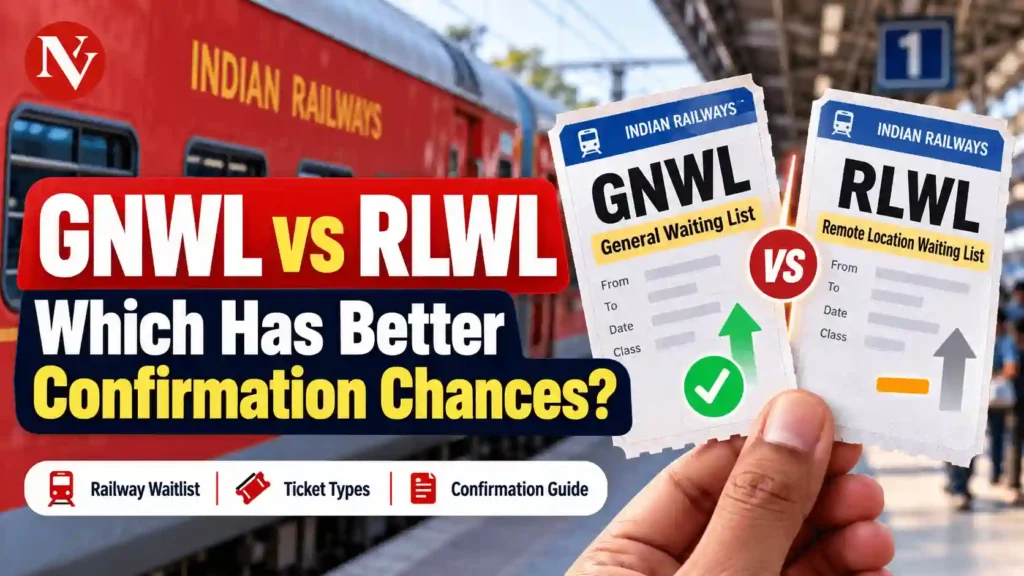
When your train ticket shows GNWL 25 or RLWL 5, the first question is usually the same: will it confirm before departure? GNWL generally has better confirmation prospects than RLWL, but the waiting-list number alone does not tell the whole story.
Your route, travel class, reservation quota, and cancellations all influence the outcome. Here’s how to understand both categories, compare two tickets sensibly, and check whether your booking is moving towards confirmation.
GNWL vs RLWL: Which Is More Likely to Confirm?
General Waiting List (GNWL) is usually more favourable because it relates to the main general quota, which typically covers a larger allocation of berths. Remote Location Waiting List (RLWL) applies to specified intermediate stations with their own reserved allocation, often smaller than the general quota.
That means fewer relevant cancellations may be available to move an RLWL ticket forward. Railway quota allocation and chart-time releases can also affect both lists.
However, GNWL does not guarantee confirmation, and an RLWL ticket can still get a berth. Comparing GNWL 50 on one journey with RLWL 5 on another requires more than knowing which category generally performs better.
What Does GNWL Mean in Indian Railways?
GNWL stands for General Waiting List. It is associated with the main general reservation quota, commonly used for journeys originating at the train’s starting station or other stations covered by that quota.
Why Does GNWL Usually Have an Advantage?
The general quota is normally a major share of a train’s reserved accommodation. When eligible passengers cancel or unused accommodation is released, GNWL positions may improve.
For example, a booking that moves from GNWL 32 to GNWL 8 has progressed considerably. But the passenger still needs RAC or confirmed status to have valid reserved travel arrangements.
What Does RLWL Mean in Indian Railways?
RLWL means Remote Location Waiting List. It applies when the allocation reserved for a designated intermediate station has been filled.
Why Can RLWL Move More Slowly?
RLWL movement is closely connected to available accommodation and cancellations affecting that remote-location allocation. A smaller pool may mean fewer opportunities for seats to open up.
An RLWL 2 ticket can confirm if space becomes available; it can also remain waitlisted until chart preparation. A low number is encouraging, not a promise.
GNWL vs RLWL: Key Differences
| Factor | GNWL | RLWL |
| Full form | General Waiting List | Remote Location Waiting List |
| Reservation pool | Main general quota | Designated remote-location quota |
| Typical journey | Origin or general-quota stations | Selected intermediate stations |
| Usual confirmation outlook | Generally stronger | Often more restricted |
| Guaranteed confirmation | No | No |
For an explanation of other codes, see News Vocal’s GNWL, RLWL and PQWL waiting-list guide.
GNWL 50 vs RLWL 5: Which Ticket Should You Trust?
Consider two hypothetical bookings:
- Ticket A: GNWL 50, for a busy long-distance train.
- Ticket B: RLWL 5, for a different route and travel date.
Ticket A has the generally more favourable category, but its waiting-list position is 50. Ticket B starts much closer to the front, but may depend on fewer quota-specific cancellations.
There is no reliable winner without train-specific information. Even two GNWL 10 tickets can behave differently if the travel dates or classes differ.
Five Factors That Affect Confirmation Chances
- Current waiting-list position: A ticket at WL 3 is closer to confirmation than WL 40 within the same comparable queue.
- Train and travel class: Seat allocations and demand vary between Sleeper, 3AC, 2AC and other classes.
- Boarding and destination stations: The relevant quota depends on the journey segment.
- Travel date: Holidays, weekends and peak travel periods can increase competition for berths.
- Cancellations and quota releases: Available seats can change before chart preparation.
No reliable fixed formula can promise that GNWL 20 has an 80% probability or RLWL 5 has a 50% probability across every train.
How to Check GNWL or RLWL Confirmation Status
Booking Status vs Current Status
A booking may show Booking Status: GNWL 35 and Current Status: GNWL 12. This means the queue position has improved since reservation, but the ticket is not yet confirmed.
To check your ticket:
- Open the official Indian Railways PNR enquiry.
- Enter the 10-digit PNR printed on your ticket.
- Review each passenger’s booking status and current status.
- Check whether the status is WL, RAC or CNF and whether charts are prepared.
- Recheck closer to the journey if the final chart is still pending.
The railway website notes that current status can still change before final charting. Its confirmation predictions are estimates based on trends, not guarantees.
When Can a Waiting-List Ticket Confirm?
A WL position may improve when confirmed passengers cancel or railway reservation allocations are adjusted. Further changes can occur during chart preparation.
There is no single reliable chart-preparation time for every station and service. Monitor the charting status shown for your PNR, especially if boarding from an intermediate station.
If confirmation is crucial—for an exam, flight connection or medical appointment—check alternative trains before the final hours rather than relying on a predicted percentage.
What Happens if GNWL or RLWL Does Not Confirm?
For a fully waitlisted IRCTC e-ticket, if all passengers remain waitlisted after chart preparation, IRCTC removes their names from the chart. The ticket is automatically cancelled, and the applicable refund is processed. Passengers cannot travel on that fully waitlisted e-ticket.
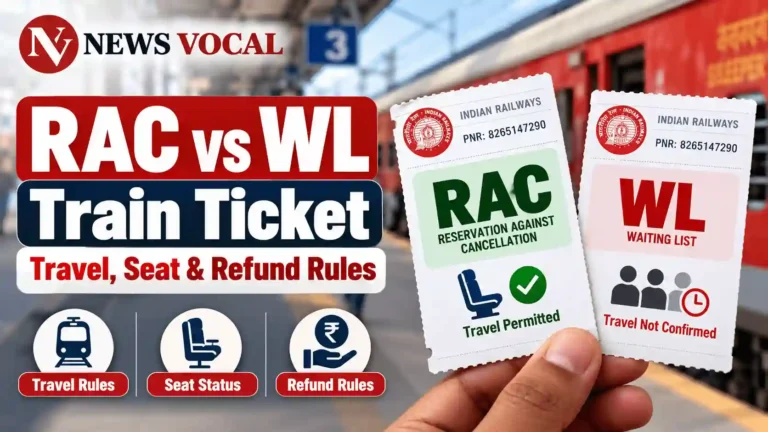
A partially confirmed PNR (where someone is CNF/RAC and another passenger is WL) follows different rules. Counter-issued waiting-list tickets are also treated differently. You can review News Vocal’s RAC vs WL travel and refund rules, or the official IRCTC waitlisted e-ticket policy.
If your trip is essential, consider another available train or an eligible alternative-booking option. Do not assume VIKALP or Tatkal will produce a confirmed berth.
Frequently Asked Questions
Is GNWL Always Better Than RLWL?
Generally, GNWL has stronger confirmation prospects because of the general quota. But a high GNWL number can be less promising than a low RLWL number on a different train.
Can RLWL 1 or RLWL 2 Get Confirmed?
Yes, if suitable accommodation becomes available. Even RLWL 1 is not guaranteed to confirm.
Does GNWL 50 Have Better Chances Than RLWL 5?
Not necessarily. You need the train, date, class, route, and current queue movement to make a meaningful comparison.
Can I Board With an Unconfirmed GNWL or RLWL E-Ticket?
Not if the entire e-ticket remains waitlisted after chart preparation. RAC and partly confirmed bookings follow different rules.
Conclusion
GNWL is generally the stronger waiting-list category, but ticket-specific circumstances matter more than labels alone. Compare current positions, monitor the official PNR and keep a backup plan for important travel. Confirmation is certain only when the booking actually reaches the appropriate travel-valid status.