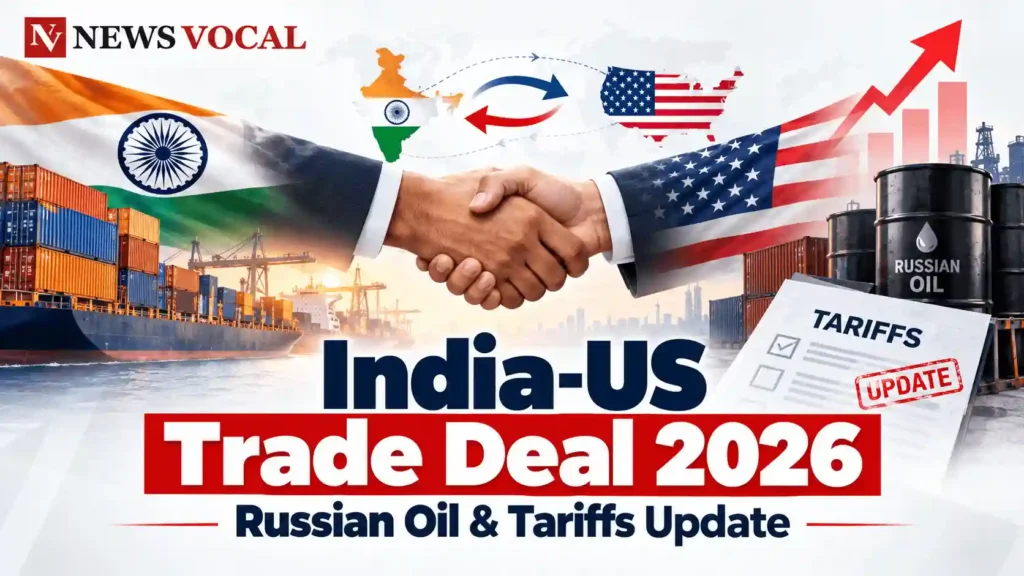
The India–US trade deal 2026 is moving closer to completion after months of disagreements over tariffs and India’s purchases of Russian oil.
On 20 October 2026, US Secretary of State Marco Rubio met External Affairs Minister S. Jaishankar in Mumbai to discuss trade, energy security, defence and technology cooperation.
Rubio indicated that negotiations were nearly complete, while the Indian government welcomed progress towards an agreement.
The developments follow US President Donald Trump’s decision to waive certain Russia-related sanctions and tariffs on 16 October.
However, the India–US Bilateral Trade Agreement has not yet been formally signed.
Here’s what has changed, why Russian oil matters, and how a trade agreement could affect India’s economy.
India-US Trade Deal 2026: What Is the Latest Update?
India and the United States have renewed efforts to finalise their proposed Bilateral Trade Agreement (BTA).
During their Mumbai meeting on 20 October, Jaishankar and Rubio discussed economic cooperation, energy, defence and emerging technologies.
What Did Rubio and Jaishankar Discuss?
Rubio described the trade negotiations as very close to completion, with only a few outstanding issues.
The Ministry of External Affairs (MEA) said both countries welcomed progress and reaffirmed their commitment to concluding the agreement soon.
According to the MEA statement reported by DD News, the discussions also covered regional security and the broader India–US strategic partnership.
Despite the positive statements, neither government has announced a final signing date.
Why Has Russian Oil Become a Major Issue in India–US Trade Talks?
India imports most of its crude oil requirements, making affordable energy supplies important for the economy.
After Russia invaded Ukraine in 2022, India increased purchases of Russian crude, partly because discounted supplies offered an economic advantage.
Buying lower-priced crude can help Indian refiners manage costs and reduce pressure on the country’s import bill.
Why Does the US Want India to Reduce Russian Oil Imports?
Washington has argued that Russia’s energy revenues help support its economy during the war in Ukraine.
The United States has therefore used sanctions and tariff threats to discourage countries from purchasing Russian energy.
India, meanwhile, has emphasised energy security, reasonable prices and diversified sources of crude oil.
According to Reuters, India’s Russian oil purchases declined in recent months, but imports have not completely stopped.
This makes energy policy an important part of the wider trade relationship.
What Happened to US Tariffs on Indian Goods?
Tariffs are taxes imposed on imported products. Higher tariffs can make Indian exports more expensive for buyers in the United States.
In August 2025, Washington imposed an additional 25% tariff on Indian goods because of India’s Russian oil purchases.
This contributed to a period of tension between the two countries.
However, on 6 February 2026, President Trump signed an executive order removing that particular additional 25% duty, effective from 7 February.
The decision followed discussions on energy purchases, economic cooperation and bilateral relations.
Are All US Tariffs on India Removed?
No.
Removing the Russian oil-related penalty did not eliminate every US import duty on Indian products.
A broader trade framework announced in February offered a basis for reducing trade barriers, but the final bilateral agreement and its detailed tariff treatment remain important.
Readers can review the White House’s February 2026 executive order.
Trump’s October 2026 Russian Oil Sanctions Waiver Explained
A significant development came on 16 October 2026, when Trump signed an executive order implementing the Lindsey O. Graham Sanctioning Russia and Iran Act of 2026.
The legislation included provisions for additional tariffs and sanctions involving Russian energy.
What Is the Graham Act’s 100% Tariff Provision?
Under the framework, countries among the five largest importers of Russian oil and gas could face an additional 100% duty on goods entering the United States if specified conditions were met.
India faced potential exposure because of its substantial Russian crude imports.
However, the President issued waivers covering specified duties, sanctions and restrictions under the legislation.
Does the Waiver Remove Every Restriction?
No.
The White House order dated 16 October explicitly preserves other applicable sanctions.
The waiver can also be reconsidered.
For India, the decision reduces an immediate source of trade uncertainty without guaranteeing unrestricted Russian oil purchases.
What Do India and the US Want From the Trade Agreement?
Both countries want stronger commercial relations, but their priorities differ.
| India’s Priorities | US Priorities |
| Competitive tariffs for Indian exporters | Greater access to India’s markets |
| Predictable trade rules | Lower tariff and non-tariff barriers |
| Protection of sensitive domestic sectors | Higher sales of American products |
| Affordable, diversified energy supplies | Increased US energy exports |
India wants its exporters to remain competitive against businesses from countries such as Vietnam and Bangladesh.
The United States is seeking additional opportunities for its industrial, agricultural, technology and energy businesses.
Both sides announced a trade framework in February 2026, described in the US Trade Representative’s statement.
Can India Replace Russian Oil With US or Venezuelan Crude?
Replacing a major oil supplier is not straightforward.
Refineries must consider crude quality, prices, shipping costs, availability and existing contracts.
During his India visit, Rubio discussed possibilities for greater energy cooperation involving Venezuelan crude.
He also indicated that Reliance Industries could refine more Venezuelan oil at its Jamnagar facilities.
According to Reuters’ 20 October report, these opportunities were part of Washington’s energy discussions.
However, greater purchases from the US or Venezuela do not automatically mean India will completely stop buying Russian crude.
How Could an India–US Trade Deal Affect Indian Exporters?
A successful agreement could create opportunities for Indian businesses exporting textiles, engineering goods, pharmaceuticals and other products.
Lower or more predictable tariffs may help these companies compete in the American market.
This could support export orders, business expansion and employment in certain sectors.
However, the actual benefits will depend on the final tariff schedules, product exemptions and rules agreed by both governments.
Not every company or industry would necessarily benefit equally.
Will the Trade Deal Affect Petrol Prices, the Rupee and India’s Economy?
The agreement could have broader economic implications, particularly through energy costs and international trade.
Will Petrol and Diesel Become Cheaper?
Not necessarily.
Additional oil suppliers may improve India’s energy security, but retail fuel prices depend on global crude prices, taxes, exchange rates and oil companies’ pricing decisions.
A trade deal does not automatically reduce petrol prices.
What About the Indian Rupee?
Changes in oil import costs and international trade can influence demand for foreign currency.
However, the rupee’s movement also depends on global interest rates, investment flows and wider economic conditions.
For a simple explanation, read News Vocal’s guide: Dollar Mehenga Hone Se India Par Kya Asar Padta Hai?.
What Is Still Pending in the India–US Trade Deal?
Despite recent progress, important details remain unresolved or unannounced.
These include the formal signing date, complete agreement text, product-specific tariffs and implementation arrangements.
Both governments must also clarify how the final agreement will operate alongside existing US trade measures.
Until an official agreement is announced, expectations about tariff reductions should not be treated as confirmed outcomes.
Frequently Asked Questions
Has the India-US Trade Deal Been Signed?
No. As of 22 October 2026, negotiations are close to completion, but the final bilateral agreement has not been formally signed.
Has India Stopped Importing Russian Oil?
No complete halt has been established. India has reduced Russian crude purchases while exploring alternative suppliers.
Has Trump Removed All Russian Oil-Related Tariffs?
No. The February order removed a specific additional 25% duty, while the October order waived specified Graham Act provisions. Other trade restrictions may still apply.
Will the India–US Trade Deal Reduce Petrol Prices?
There is no guarantee. Petrol prices depend on several factors beyond bilateral trade agreements.
When Will the India–US Trade Agreement Be Finalised?
Neither government has announced a confirmed signing date, although officials have expressed optimism about an early agreement.
Conclusion
The India–US trade deal is closer to completion following renewed diplomatic talks and Washington’s latest sanctions waiver.
However, Russian oil, market access, and tariff details remain important considerations.
For more economic developments and business explainers, explore News Vocal’s Economy section.